Whiplash Part 1: What is Whiplash?
Whiplash refers to a neck injury caused by rapid acceleration-deceleration forces on the cervical spine (the bones in your neck).
This type of injury is most commonly associated with road traffic accidents – particularly rear-end and side-on collisions. However, whiplash can also result from:
-
Contact sports such as rugby and football
-
Action sports like skiing or cycling
-
Slips, trips, and falls
The rapid change in force causes the neck to whip forcefully backwards and aggressively forward. This movement can damage the soft tissues in the cervical spine and lead to longer-term neurological issues that often mimic concussion symptoms. In fact, concussions and whiplash frequently occur together during the same event.
(Read our related post: [Link to Concussion Blog])
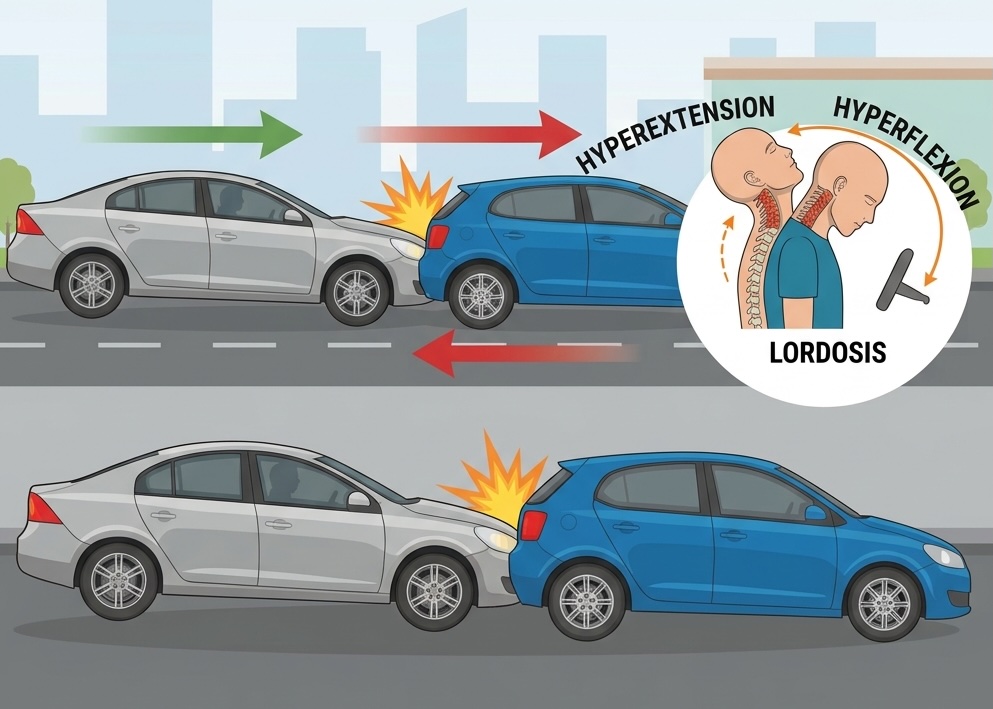
What Happens to Your Neck During Whiplash?
During a whiplash event, uneven forces are forced through the bones, joints, muscles, and ligaments of the neck. This affects different levels of the spine in distinct ways:
-
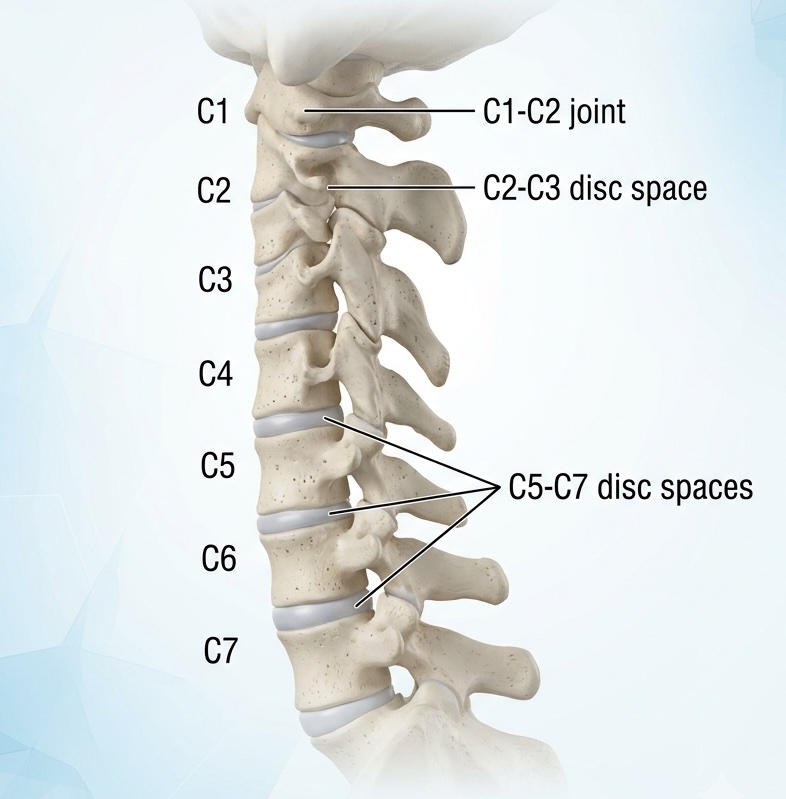
Mid-to-Lower Neck (C3–C7): These joints undergo extreme backward bending (hyperextension) followed by sudden forward bending (hyperflexion). This increases the risk of strain or injury to the spinal discs and facet joints.
-
Upper Neck (C1–C2): The upper cervical spine has greater mobility because there is no spinal disc between the C1 and C2 vertebrae. This makes the region vulnerable to shearing forces, which can stretch or injure ligaments and alter joint alignment at the base of the skull (the cranio-cervical junction).
Ligaments and Muscle Tension After Whiplash
The most common ligaments affected by whiplash are the anterior longitudinal ligament, alar ligaments, and transverse ligament.
Damage to these supportive tissues can lead to micro-instability in the neck joints. In rare cases where extreme force is involved, ligaments can rupture, leading to cranio-cervical instability (CCI). While true severe CCI is less common, its symptoms can closely mirror those of a persistent structural misalignment.
Delayed Symptoms and Muscle Spasms
Symptom onset from ligament strain is often delayed because surrounding neck muscles react to protect the area:
Overactive Superficial Muscles:
Muscles like the sternocleidomastoid (SCM), upper trapezius, and levator scapulae frequently go into spasm. This causes noticeable stiffness and pain in the days and weeks following the injury.
Inhibited Deep Neck Flexors:
Simultaneously, the deeper stabilising muscles at the front of the neck often become weakened or “inhibited,” exacerbating postural distortion and long-term instability.
Facet Joint Injuries and Neurological Effects
One of the largest contributors to ongoing neck pain following whiplash is an injury to the facet joints (the small guiding joints located on the back of each vertebra).
Facet joint irritation typically produces chronic neck pain that worsens when:
-
Looking up or turning your head
-
Sitting for extended periods
-
Applying pressure near the shoulders or between the shoulder blades
Disrupted “Position Sense” (Proprioception)
Strain to the joint capsules in the neck disrupts proprioception – the sensory system that sends signals to your brain about where your head and neck are in space.
When this position-sense system is disrupted, it can trigger delayed symptoms that may not appear until weeks or months after the initial accident, including:
-
Dizziness or a feeling of imbalance
-
Motion sensitivity
-
Visual disturbances
-
Brain fog and difficulty concentrating
Note: These neurological symptoms can occur even if standard X-rays or basic scans appear clear.
Long-Term Effects on Spinal Discs and Posture
If whiplash symptoms persist, an MRI scan may be recommended to evaluate the cervical spine. A common finding is damage to the spinal discs, particularly in the lower neck region (C4, C5, C6, and C7).
Over time, disc injuries can accelerate structural wear and tear (degeneration), leading to a loss of normal disc height. This may irritate nearby nerve roots, resulting in:
-
Numbness
-
Tingling
-
Weakness radiating down into the shoulders or arms
These changes do not always show up immediately. Degenerative shifts often develop over years, reinforced by postural compensations such as forward head posture, loss of the natural neck curve (military neck), and altered upper back (thoracic) biomechanics.
Why You Shouldn’t Ignore a Whiplash Injury
Whiplash should not be ignored – neither for its immediate discomfort nor for its potential long-term consequences.
Many patients we assess have experienced a whiplash-style impact at some point in their lives. Because minor injuries often resolve on a surface level once the initial pain subsides, they are easily forgotten. However, unaddressed structural changes can alter nervous system feedback and contribute to chronic neck, back, or shoulder issues down the road.
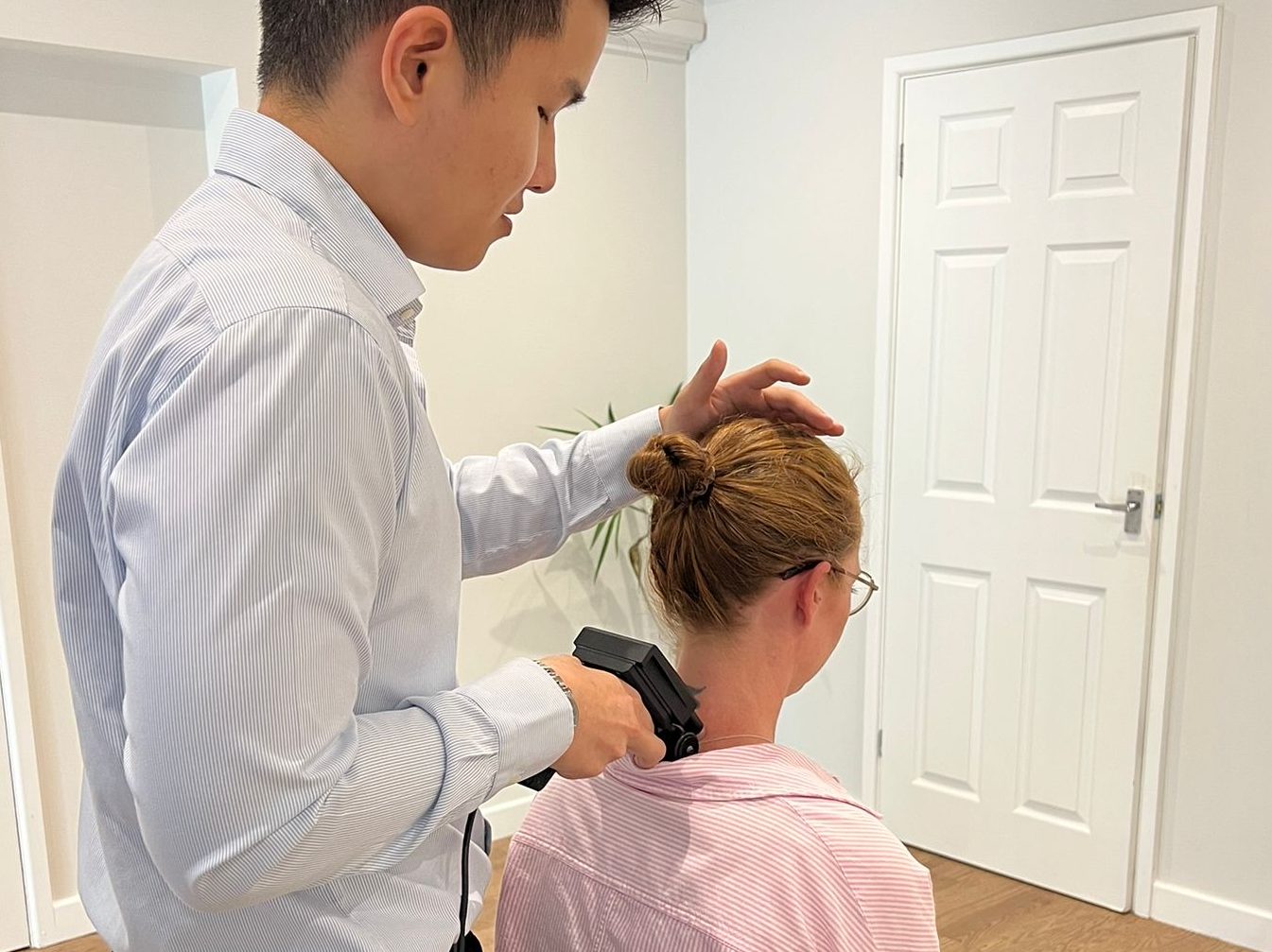
How Upper Cervical Chiropractic Care Can Support Recovery
If you have experienced a recent whiplash injury – regardless of how mild or severe it felt at the time – having a detailed spinal assessment can be a crucial step in your recovery.
Upper cervical chiropractic care focuses on a gentle, precise approach designed to:
-
Assess and restore balanced spinal biomechanics
-
Reduce strain on surrounding tissues and joint capsules
-
Help support proper nervous system function
This gentle, non-invasive approach aims to aid your body’s natural healing process and help protect long-term spinal health.
What’s Next?
In Part 2 of this series, we cover how we assess whiplash injuries in our clinic and the steps involved in targeted chiropractic care.
[Read Part 2: Assessing and Managing Whiplash]