
The Brainstem and The Upper Cervical Spine
Have you ever wondered how your body automatically coordinates your heartbeat, keeps you breathing while you sleep, or regulates your blood pressure without you ever having to think about it? The answer lies in a master control centre at the base of your skull.
Your brainstem is the bridge between your brain and the rest of your body, acting as a vital command centre for your entire nervous system. However, because of its location, its ability to function optimally is deeply intertwined with the alignment of your upper neck. Understanding this connection is essential to understanding your overall health and adaptability.
What is the Brainstem?
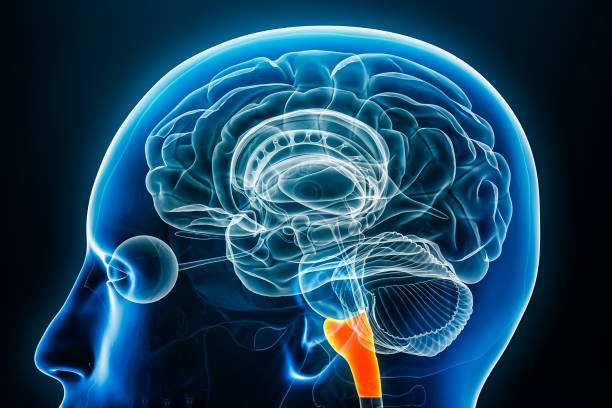
The brainstem is a small but vital part of the central nervous system. It sits underneath the cerebral hemispheres and in front of the cerebellum, extending downwards to become the spinal cord as it exits the base of the skull.
-
The Craniocervical Junction: At this crucial transitional point, the brainstem is protected by the upper cervical spine, specifically the C1 (atlas) and C2 (axis) vertebrae.
-
Structural Anchors: The lower brainstem and the spinal cord are attached to the inner ring of the vertebra by strong ligaments called dentate ligaments. These help to keep the spinal cord suspended within the neural canal and allow it to move with the normal motion of the vertebrae.
-
Myodural Bridges: The brainstem also has direct physical attachments to the suboccipital muscles, known as myodural bridges.
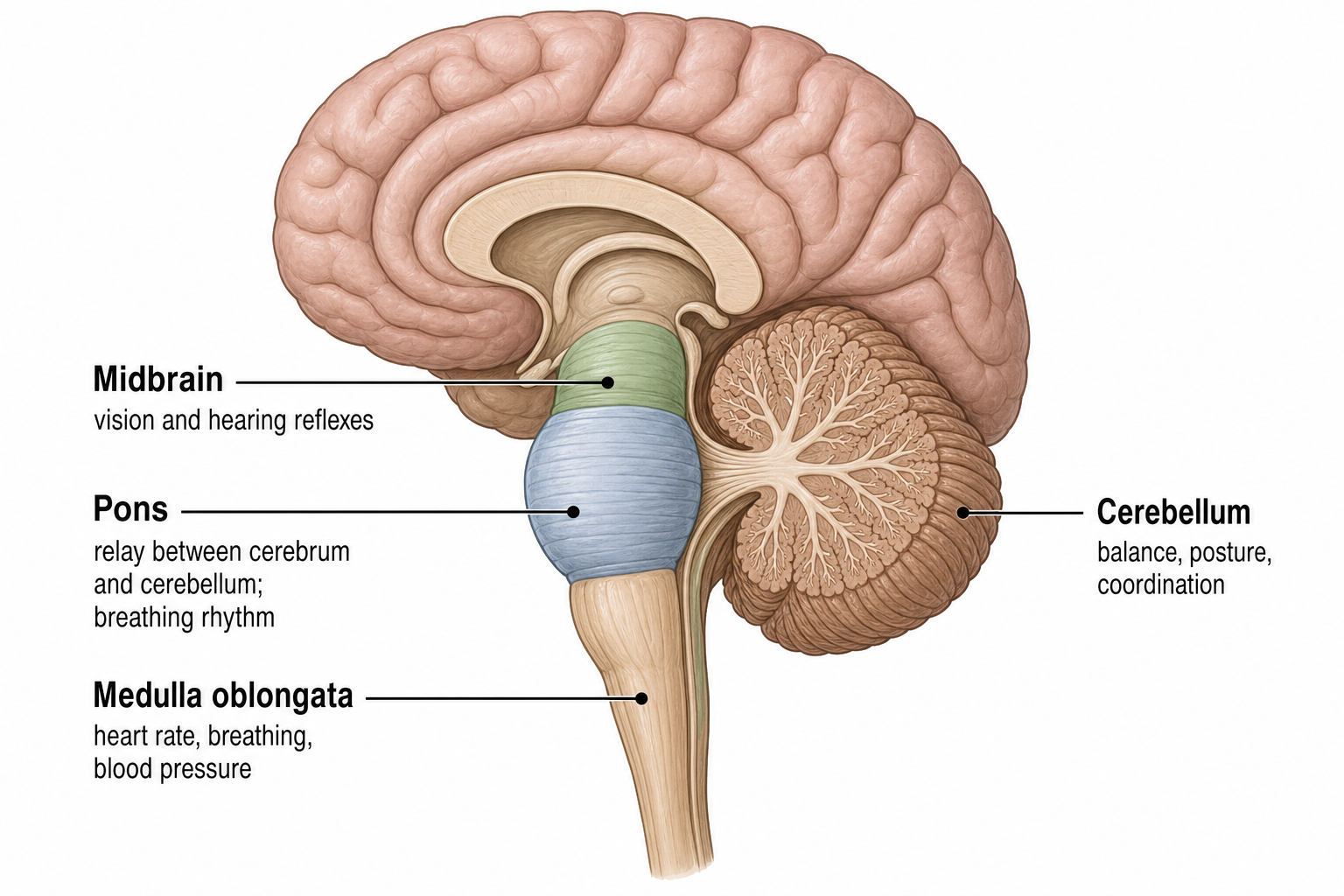
The Three Core Components
The brainstem comprises three different parts, each playing a critical role in regulating different aspects of the nervous system:
- The Midbrain
- The Pons
- The Medulla Oblongata
The brainstem is also the source of a collection of nerves called the Cranial Nerves. These nerves supply vital structures within the head, neck, and face – innervating the eyes, ears, nose, mouth, throat, and facial muscles, while providing sensation across the face.
Why is the Brainstem Important?
Because it is a vital part of the central nervous system, the brainstem is responsible for regulating many of the functions and actions of the body that are not under conscious control – the autonomic functions.
This includes:
-
Heart rate and blood pressure
-
Breathing rate
-
Digestion
-
Sleep cycles
The Fusebox Analogy: Think of the brainstem as the fusebox of your nervous system. Almost every single neural pathway runs through this relatively small part of the brain. Because it is densely packed with highly active nerve tissue controlling your entire physiology, looking after it is super important.
Imagine if someone started messing around with the fusebox in your house – it’s probably going to cause a few major issues. Fortunately, we have professionals to keep your home’s electrical fusebox functioning when issues occur. Just as importantly, upper cervical chiropractors exist to do the exact same thing for your body! When dysfunction occurs here, it can cause a multitude of different symptoms and play a role in many different conditions.
How Does the Upper Cervical Spine Impact the Brainstem?
When the top bones of the upper cervical spine become misaligned, they get locked out of position. As a result, critical brainstem function can be disrupted through several distinct mechanisms:
1. Mechanical Stress
Due to the nature of how the vertebrae misalign, the dentate ligaments attaching the lower brainstem to the vertebrae will place torquing forces on the neural tissues, negatively impacting how they function. Similar issues occur via the myodural bridges; when a misalignment is present, the suboccipital muscles will chronically contract to try and stabilise the upper cervical spine, exacerbating the mechanical tension placed on the lower brainstem.
2. Disrupted Blood Supply
The blood supply to the brainstem can be impacted at the level of the small blood vessels directly supplying the spinal cord. Due to mechanical stress from a misalignment, these small vessels may not supply the spinal cord efficiently.
Larger vessels can be involved too. The vertebral arteries, carotid arteries, and internal jugular veins can all be affected by upper cervical misalignment due to their close proximity to the top bones in the neck. When these bones are out of position, normal blood flow is disrupted. This may also be seen alongside other structural abnormalities assessed on imaging modalities.
3. Compromised Cerebrospinal Fluid (CSF) Flow
Cerebrospinal fluid bathes the brain, keeps it buoyant within the skull, transports essential nutrients, and removes waste products. When upper cervical misalignments cause CSF to circulate incorrectly, it can pool within the skull and directly impact overall brain function.
Our Approach to Your Health
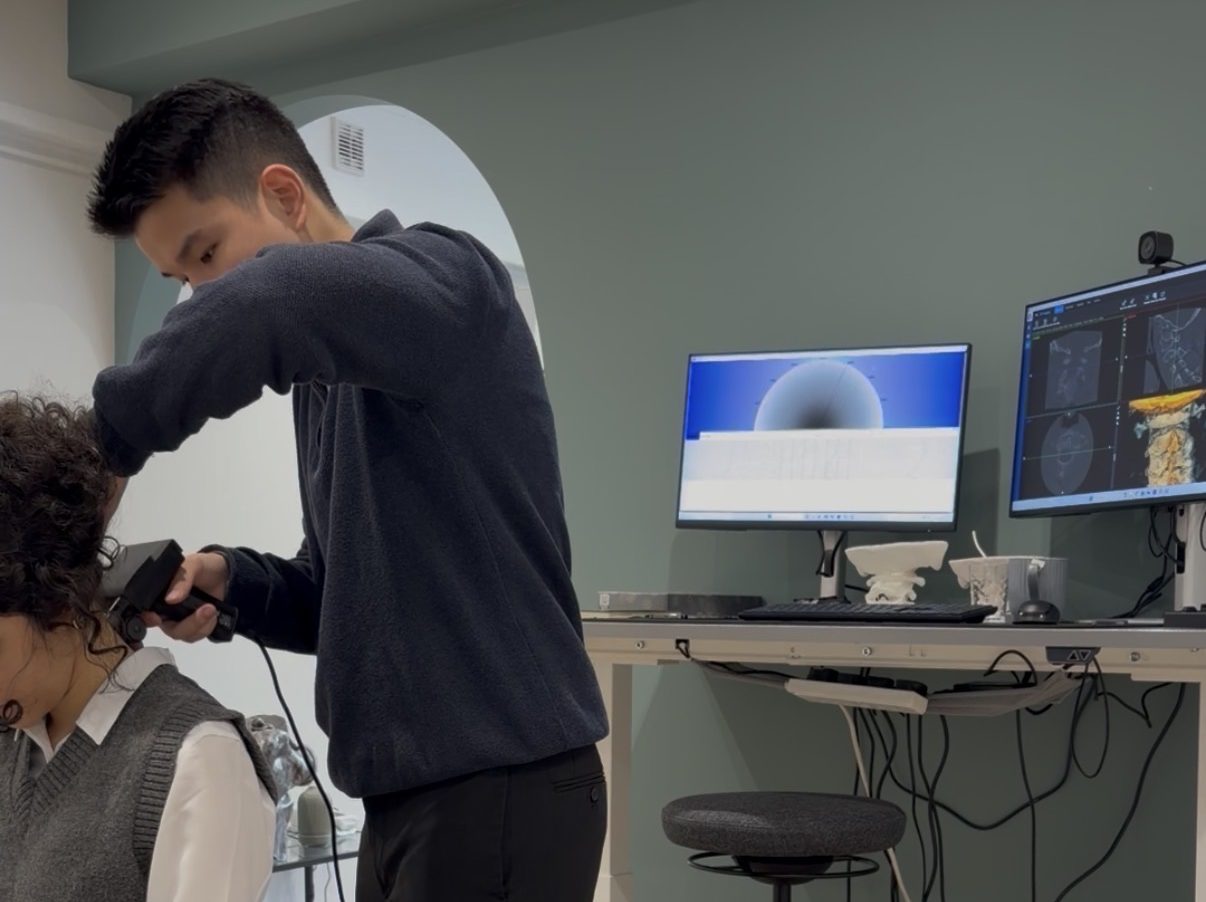
Assessing the precise function of your brainstem is a cornerstone of our assessment process with clients. We monitor this relationship throughout care using a variety of specialised testing. As your brainstem function clears and your nervous system adaptability improves, true health naturally follows!
If you want to find out more
We offer an initial assessment that maps out how your nervous system is currently functioning, using thermography and HRV analysis, and gives us a clear picture of whether upper cervical care is the right fit for you.