
Most people come into a chiropractic clinic with a vague brief: “I want to feel better.” Hard to argue with that. But “feeling better” is difficult to measure, difficult to track, and if someone has a bad week, easy to doubt.
Part of why Top Chiropractic uses NeckCare is exactly that. Not as a gadget. As a way to put numbers to something that would otherwise stay invisible.
What NeckCare Actually Does
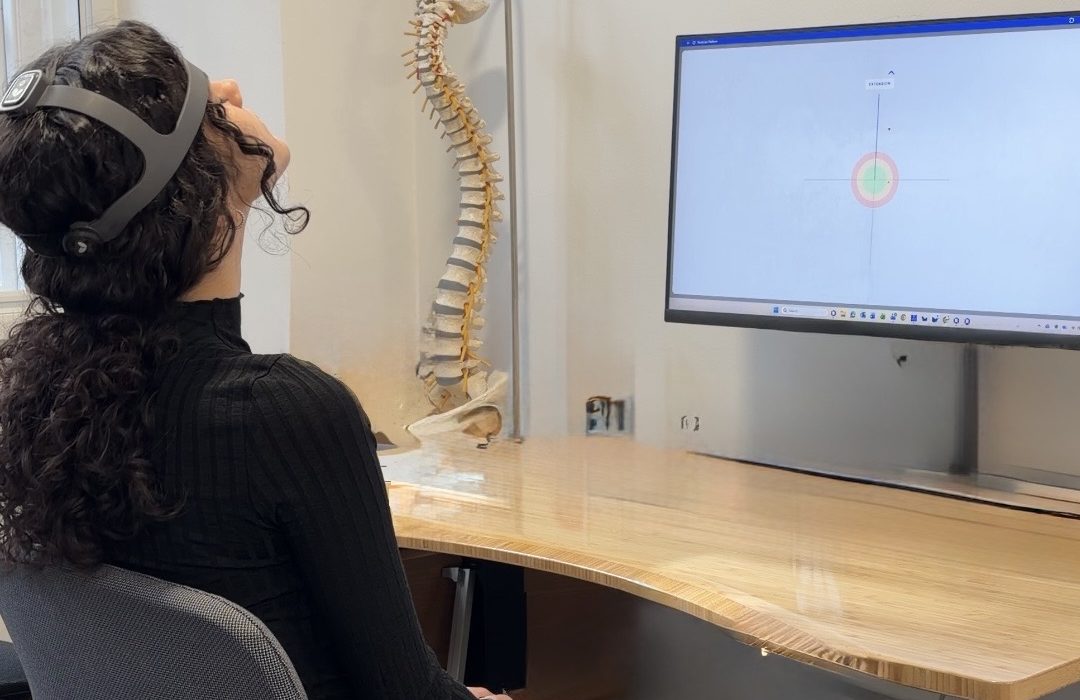
NeckCare is an FDA-listed assessment device built around three specific tests of cervical spine function. Run together, they show how the neck is actually working, not just how it looks on a scan or how someone reports feeling on a given day.
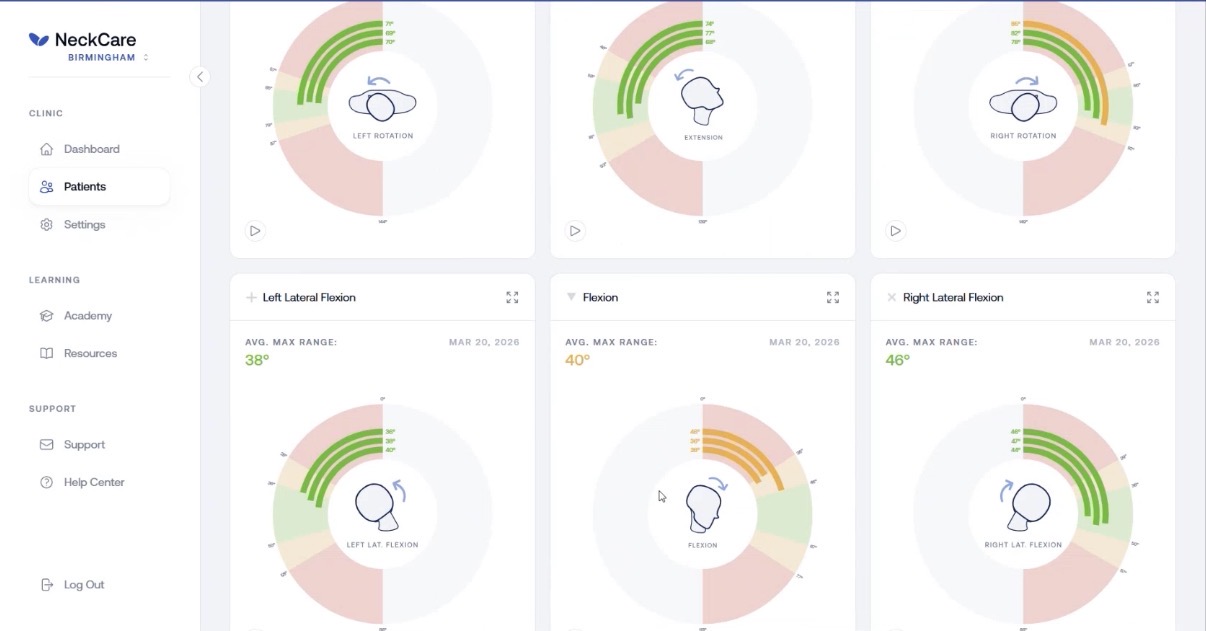
- Cervical Range of Motion measures how far the neck moves in six directions, flexion, extension, lateral flexion, and rotation, in degrees. It takes less than two minutes and captures data at over 120 positional points per second. If there’s restriction on one side, or movement that drops off at a certain angle, it shows up.
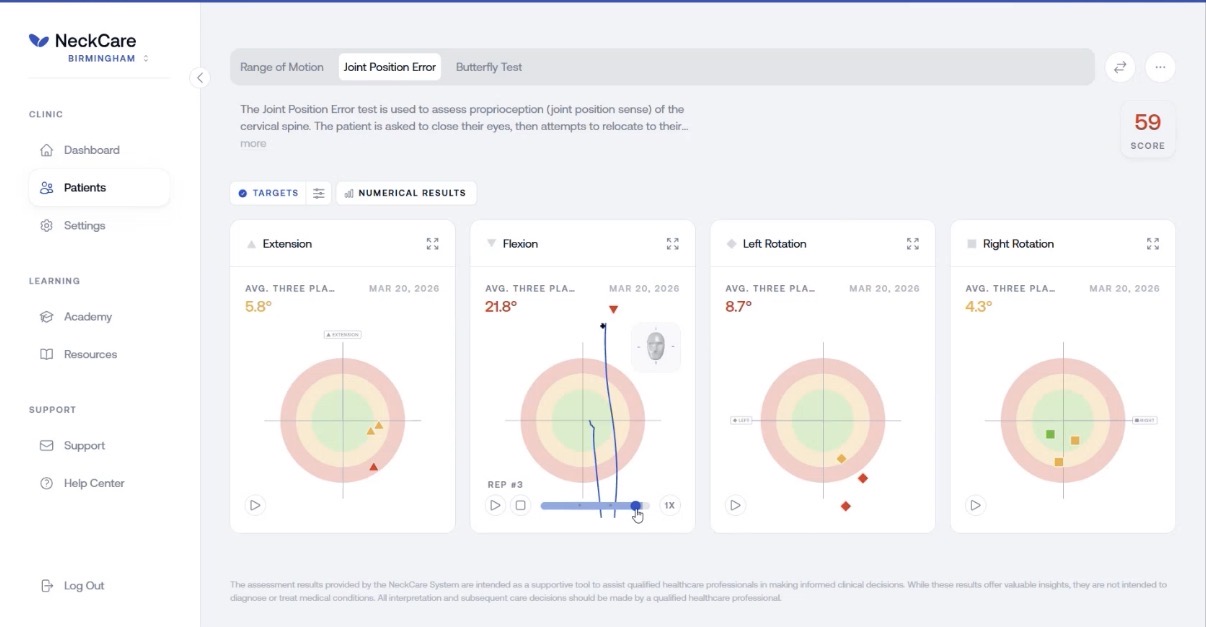
- The Joint Position Error (JPE) Test assesses proprioception, the neck’s ability to accurately sense where it is in space. The client turns their head, then tries to return to neutral. The gap between where they think neutral is and where it actually is tells the clinician a lot about how well the cervical mechanoreceptors are functioning. This matters for upper cervical care specifically, because a misaligned atlas disrupts exactly these receptors.
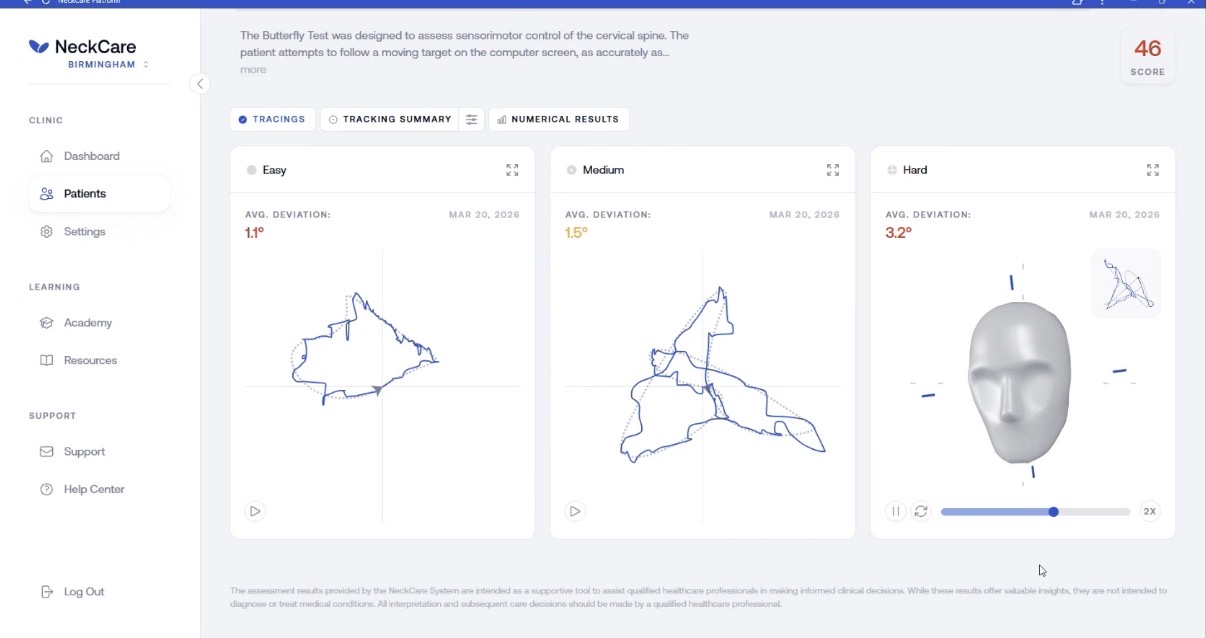
- The Butterfly Test goes a step further, measuring sensorimotor integration, the coordination between head movement and visual tracking. Poor scores here often correlate with dizziness, balance issues, or post-concussion symptoms.
Why Objective Data Changes the Conversation
Clients often struggle to notice gradual improvement. Someone who has had daily headaches for three years gets used to the low hum of it. They might be 40% better and still feel like nothing has changed, because the comparison point in their head is the day they walked in, not six months ago.
NeckCare solves that. Every reassessment produces a visual report the client can see and compare to their previous results. The numbers either moved or they didn’t. There’s no ambiguity about whether the care is doing anything.
It also sharpens clinical decisions at Top Chiropractic. If thermography from Titronics and NeckCare data both shift after an adjustment, that’s convergent evidence the nervous system is responding. If thermography normalises but range of motion stays restricted, that points somewhere specific. One informs the other.
What This Means If You’re the One in the Chair
Most people who come to Top Chiropractic have already been somewhere else. They’ve had scans that came back normal. They’ve been told to stretch more, stress less, take ibuprofen. And they still feel off.
NeckCare doesn’t replace that history. But it does give it context.
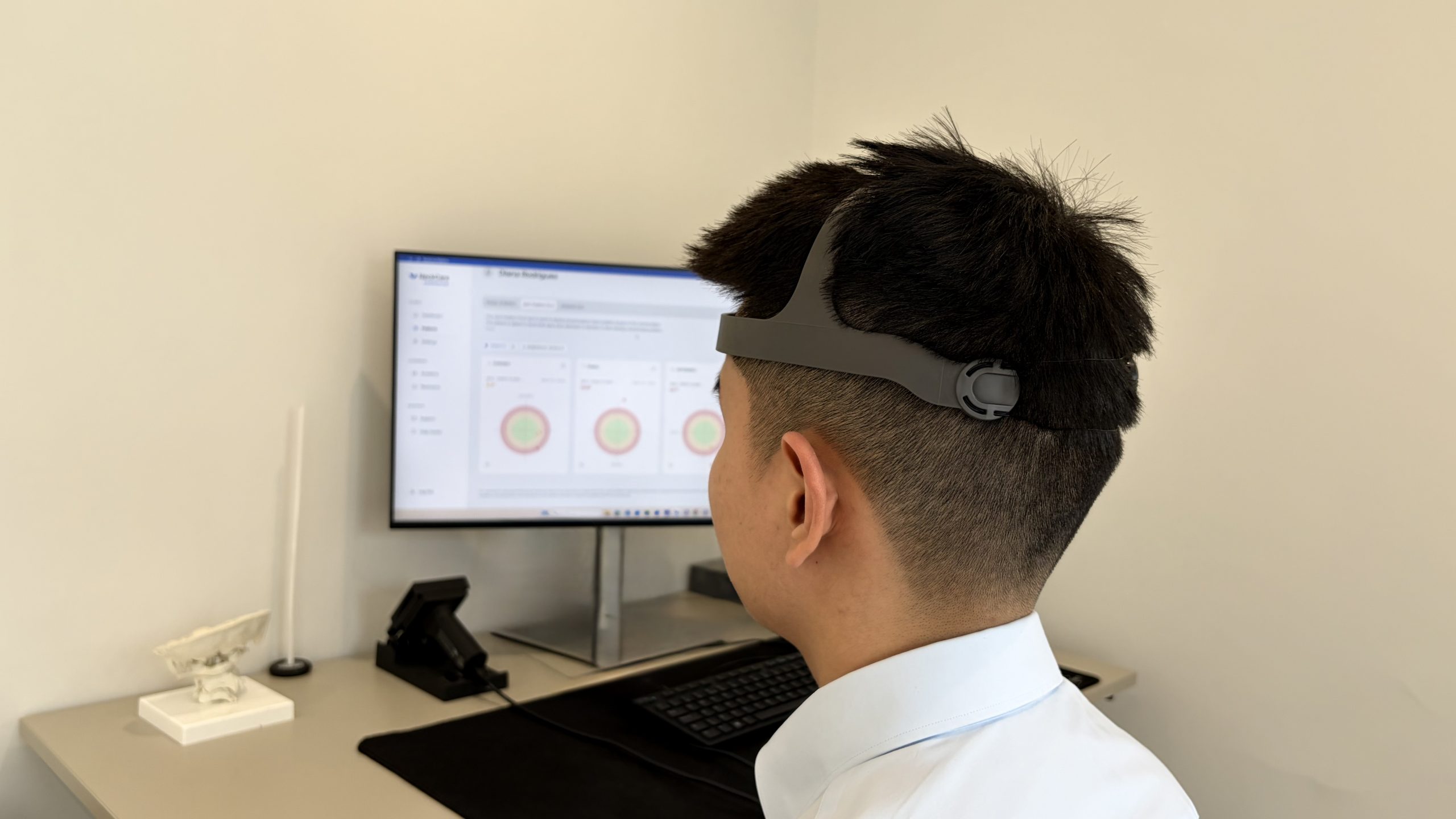
Before chiropractic care starts, the assessment runs in under ten minutes. There’s no pain involved. No awkward positioning. The client sits upright, follows a few simple instructions, and the device does the rest. By the end, there’s a baseline, an actual picture of how the neck is functioning right now, not a subjective impression from a questionnaire.
That baseline does a few things.
It means the care is tailored from day one. If range of motion is restricted on the left but proprioception is the bigger issue, the approach reflects that. If dizziness or balance problems are part of the picture, the Butterfly Test picks it up in a way that a standard clinical observation might not.
It also means progress is something you can see, not just something you’re asked to trust. Reassessments happen at regular intervals throughout care. The reports are visual, straightforward, and designed to be read without a clinical background. When something improves, it shows up on the chart. When something hasn’t shifted yet, that shows up too, and it helps the clinic adjust rather than guess.
For people who’ve spent months or years wondering whether anything was ever going to change, that visibility is worth something. You’re not just turning up and hoping. You know where you started, you can see where you are, and the next step isn’t a mystery.
What Clients Notice
The data tends to do something else too: it keeps people engaged in their care. When someone watches their JPE score improve over three months, even modestly, they stop second-guessing whether the process is doing anything. Progress that would have gone unnoticed becomes visible. That matters more than it sounds.
Research backs this up. A 2009 study in PMC found statistically significant improvements in neck pain and disability scores after upper cervical care across an average of fewer than six visits. Measuring those outcomes matters. It’s the difference between a client who continues care because they can see the evidence, and one who drops off because nothing seemed to be happening.
The Short Version
NeckCare gives the clinic a language for progress that doesn’t rely entirely on how someone feels on a Tuesday morning. Cervical range of motion, proprioception, sensorimotor integration, measured at the start, tracked over time, set against what healthy function actually looks like.
Knowing the work is doing something shouldn’t require faith. At Top Chiropractic, it doesn’t.
Curious about how your cervical spine is functioning? Book a FREE discovery call here
References
- NeckCareSystem. Clinical overview: cervical range of motion, JPE testing, and Butterfly Test. neckcare.com
- Woodfield HC et al.Craniocervicalchiropractic procedures. Journal of the Canadian Chiropractic Association. 2015;59(2):173–192.
- ErikssonCrommertM et al. Head repositioning accuracy in people with neck pain. Manual Therapy. 2020.
- Guzman J et al. Neck pain outcomes. Spine. 2008.
- PMC. Neck pain and disability outcomes following chiropractic upper cervical care: a retrospective case series. 2009.