
Why Does Such a Light Touch Make Such a Dramatic Difference?
The first time someone walks in for an upper cervical adjustment, the look on their face after tends to say it all. A gentle nudge, barely any force, no loud pop, no sudden movement, and it’s done. The question hangs in the air without being asked: Was that it?
It’s one of our favourite moments at the practice. Not because of the surprise. Because of what comes next.
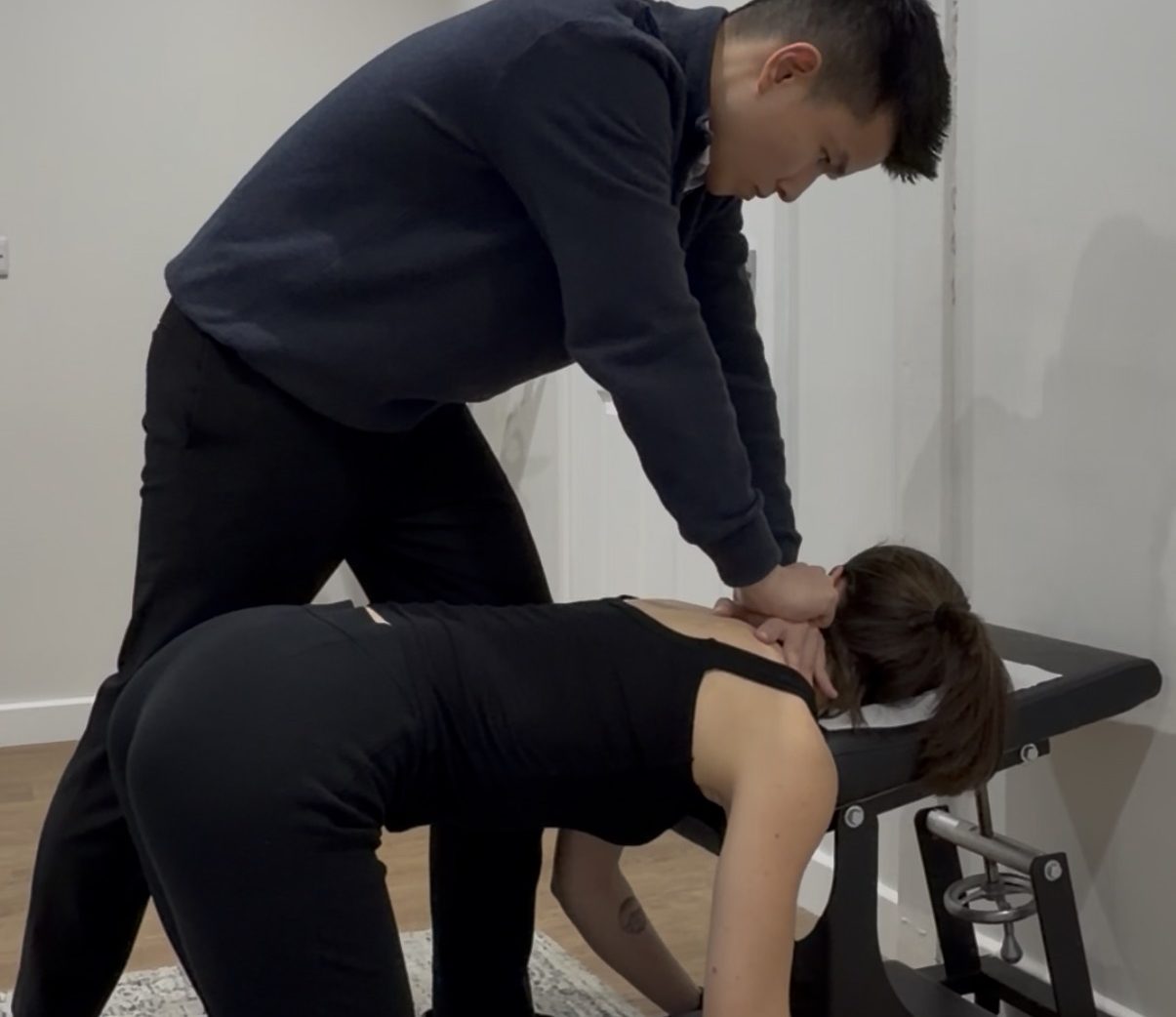
Where the Adjustment Actually Happens
The atlas (C1) and axis (C2) sit at the very top of the cervical spine, where the skull meets the neck. That junction is where the brainstem lives.
The brainstem isn’t just another structure. It controls:
- Heart rate and blood pressure
- Breathing and digestion
- Sleep cycles
- Pain processing
- Immune response
- Balance and coordination
It fits in a space roughly the size of a thumb. A misalignment there, often no more than the thickness of a fingernail, can affect virtually every system in the body.
That’s the point. It’s not about the size of the force. It’s about the precision of the location.
It’s Neurological, Not Mechanical
Most people assume chiropractic works by physically moving a bone back into place. There’s a mechanical element, yes. But upper cervical chiropractic produces change through the nervous system, not just the structure.
The upper cervical region has one of the highest concentrations of mechanoreceptors (sensory nerve receptors) of anywhere in the body (Peng et al., 2021). These receptors constantly feed information into the nervous system about head position, movement, and balance. When the atlas is misaligned, those receptors start sending garbled signals. The brain gets faulty data. Muscle tension builds, posture compensates, autonomic function starts to drift. The effects don’t stay local.
A precise correction at C1 doesn’t need force. It needs accuracy. The aim is to restore correct neurological input so the brain can regulate what it’s been struggling to manage.
Think of it like resetting a compass that’s slightly off. No need to smash it. Just return the needle to true north.
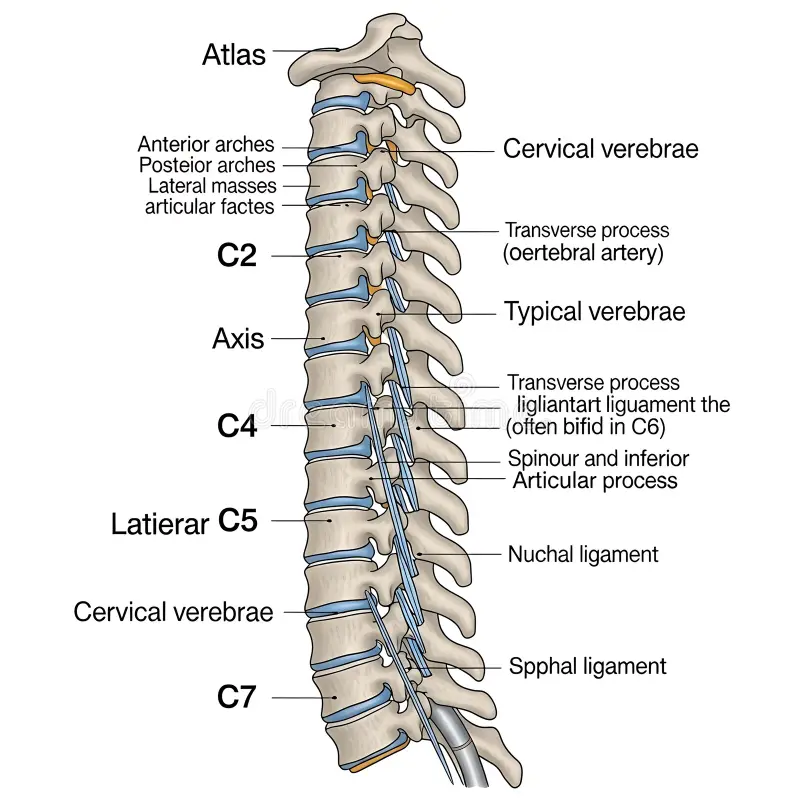
Why Less Force Works Better Here
The atlas is the most mobile vertebra in the entire spine, accounting for roughly 50% of total head rotation (Woodfield et al., 2015). It has no disc beneath it for extra stability, so the joint responds far better to a directed, specific correction than to high-velocity manipulation. Too much force and you overshoot. The right vector at the right angle and the joint corrects efficiently and holds.
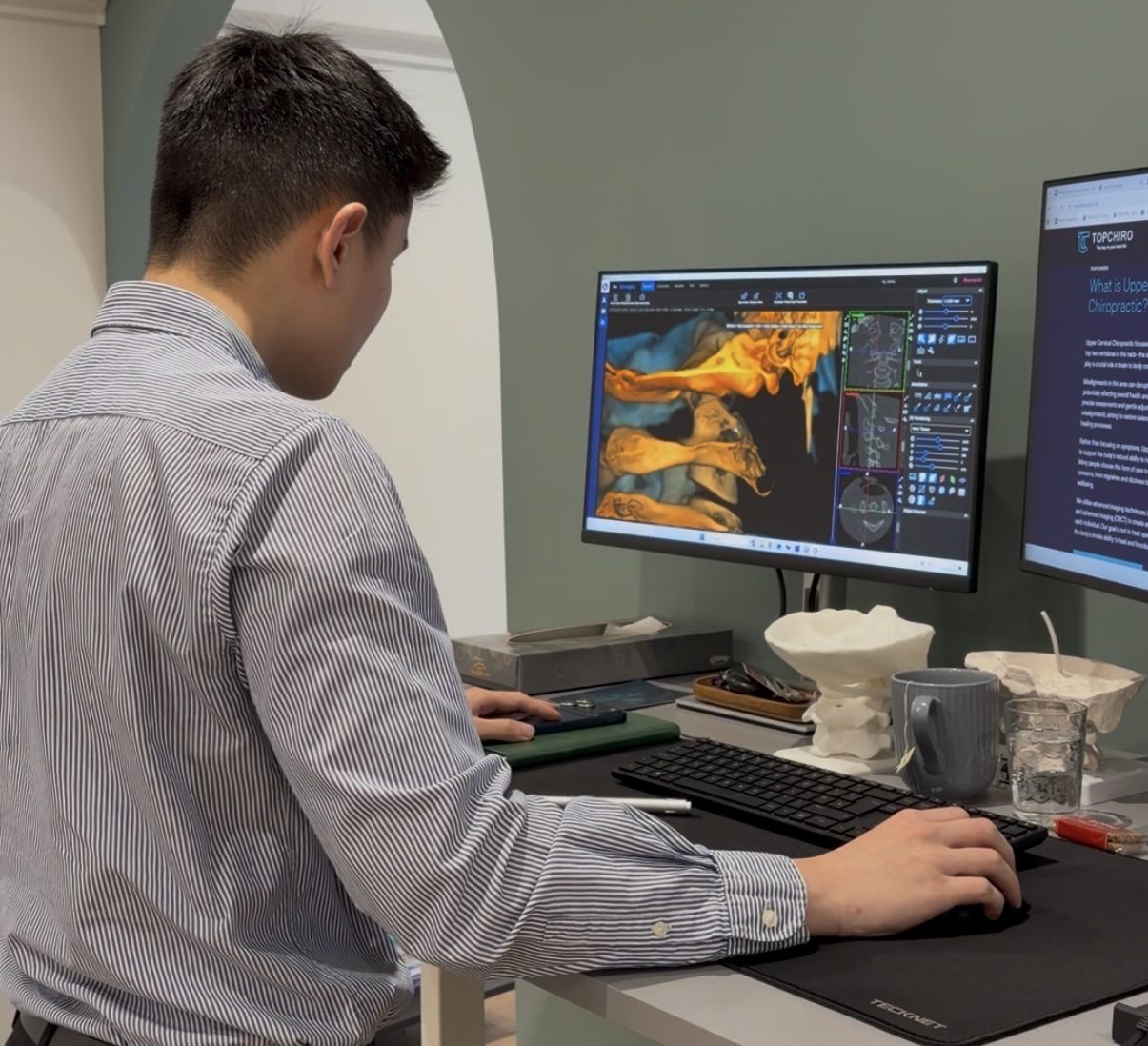
At Top Chiropractic, CBCT imaging calculates the exact angle and direction of each client’s misalignment down to fractions of a degree before anyone is touched. The adjustment follows a mathematical calculation, not a guess.
That’s why patients often hold their correction for weeks, sometimes months, between visits. The specificity of the adjustment means the joint can maintain position without being constantly pushed back.
So Why No Crack?
The popping sound in traditional chiropractic comes from cavitation – gas releasing rapidly from the synovial fluid in a joint. Harmless, but not the indicator of a successful adjustment that most people think it is.
Upper cervical adjustments using the knee chest technique apply low enough force that cavitation doesn’t have to occur. The results don’t depend on the sound.
What matters is how the nervous system responds. At every visit, we will use Titronics infrared thermography, temperature readings along the spine that reflect nervous system function. If the thermography normalises after an adjustment, the body has responded. That’s the measure. Not a crack.
What the Research Shows
A few data points worth knowing:
- A study in the Journal of Human Hypertension (Bakris et al., 2007) found that atlas realignment produced measurable reductions in blood pressure. The researchers compared the effect to taking two blood pressure medications simultaneously.
- Research published in the Journal of the Canadian Chiropractic Association (Woodfield et al., 2015) documents cases of migraines, sciatica, post-concussion symptoms, and hypertension improving following upper cervical care.
- Studies on cervical proprioception confirm the upper cervical region plays a dominant role in balance, spatial orientation, and sensorimotor control, more so than visual or vestibular input in some conditions (Frontiers in Neuroscience, 2022).
The mechanism isn’t magic. It’s neurology.
A Word on Those Videos
Most chiropractic content going viral on social media isn’t upper cervical. It’s filmed for the dramatic reaction, for the crack, the gasp. That content exists for engagement, not to represent what chiropractic care actually looks like.
Upper cervical adjustments don’t film particularly well in that format. Nothing explosive happens. A client kneels down, we place our hands, a precise correction is made, they sit up, and thermography is checked.
Then over the following days and weeks, things start shifting. Headaches that have been present for years begin to lift. Sleep improves. Posture changes without the patient consciously doing anything. Children who have been struggling begin to thrive.
That’s what matters. Not the video.

Questions Patients Often Ask
- If I don’t feel anything during the adjustment, how do I know it worked?
It gets measured. Thermography before and after shows whether the nervous system has responded. Subjective sensation in the moment is not a reliable indicator either way.
- Does it hurt?
Almost never. Some mild muscle soreness in the days after is common as the body adjusts. A lot of people feel deeply relaxed or a bit tired immediately after the adjustment. A few notice nothing at all until the symptoms they came in for start to change.
- Why doesn’t everyone practise this way?
It requires advanced training, CBCT imaging, thermography equipment, and a much longer assessment process than standard chiropractic. Very few clinics have the setup to do it properly.
- How many adjustments will I need?
It varies. Some people respond quickly and hold for weeks. Others, particularly those with older or trauma-related injuries, take longer to stabilise. We assess this at every visit. Adjustments only happen when the body actually needs one.
The Short Version
More force doesn’t mean better results. In upper cervical chiropractic, the opposite is often true.
A light touch can create dramatic change because the goal isn’t to push the body into position. The aim is to restore the neurological input that lets the body sort itself out. The joint has been waiting for the right signal, not the strongest one.

Think something might be off at the top of your spine?
If unresolved symptoms, headaches, dizziness, fatigue, chronic pain, haven’t responded to other approaches, an upper cervical assessment might be worth a conversation.
Book an initial consultation at Top Chiropractic
References
- Peng B, Yang L, Li Y, Liu T, Liu Y. Cervical Proprioception Impairment in Neck Pain — Pathophysiology, Clinical Evaluation, and Management: A Narrative Review. Pain and Therapy. 2021;10(1):143–64.
- Woodfield HC, York C, Rochester RP, et al. Craniocervical chiropractic procedures — a précis of upper cervical chiropractic. Journal of the Canadian Chiropractic Association. 2015;59(2):173–192.
- Bakris G, et al. Atlas vertebra realignment and achievement of arterial pressure goal in hypertensive patients. Journal of Human Hypertension. 2007;21:347–352.
- Frontiers in Neuroscience. The contribution of cervical proprioception to dynamic head–trunk orientation. 2022;15:774448.