
The effects of upper neck tension do not stop at pain. As we discussed in our previous post regarding blood flow and fluid pressure, the brainstem and the craniocervical junction are vital to neurological health. If you have ever experienced “brain fog,” intense light sensitivity, or the strange visual disturbances of an aura, you are experiencing the neurological impact of a structural problem.
The Muscles at the Base of Your Skull: Where a Lot of Migraine Pain Begins
The Suboccipital Muscles
Sitting at the very base of the skull is a group of four small, deep muscles called the suboccipital muscles. They are responsible for small, precise movements of the head and, crucially, they constantly feed the brain with information about where your head is positioned.
These muscles contain more nerve endings per gram than almost any other muscle in the body. They are roughly five times more densely packed with sensory receptors than the muscles of the hand. They are extraordinarily sensitive.
When the upper neck is misaligned, these muscles go into a state of constant low-level contraction as the body tries to protect the area. Over time, this sustained tension leads to reduced blood flow within the muscle tissue, a build-up of waste products, and the formation of what are known as trigger points, tight, irritable spots within the muscle that refer pain to other areas.
Where Does the Pain Go?
The referred pain pattern from the suboccipital muscles is well documented. Research by Travell and Simons in their textbook Myofascial Pain and Dysfunction showed that trigger points in these muscles send pain in an arc from the base of the skull, up over the crown of the head, and into the forehead, temple, and the area behind the eye. This matches almost exactly what migraine patients describe.
There is another layer to this as well. The suboccipital region sits right next to the upper part of the trigeminal nucleus, the nerve centre that processes pain signals from the face and head. Research by Bartsch and Goadsby (2002)showed that stimulating the occipital nerve in this area increases the sensitivity of trigeminal nerve cells. In plain terms, tension and irritation in the upper neck can make the brain’s pain system more reactive, lowering the threshold for a migraine attack.
This process is called cervicotrigeminal convergence, and it is one of the strongest neurological arguments for the link between the neck and migraine.
Bartsch T, Goadsby PJ. Stimulation of the greater occipital nerve induces increased central excitability of dural afferent input. Brain. 2002;125(7):1496-1509.
Low Energy and Brain Fog
The effects of upper neck tension do not stop at pain. The brainstem contains the reticular activating system, a network of nerve cells that controls alertness, energy levels, and sleep quality. When the craniocervical junction is under mechanical stress, this system is disrupted. The result is the kind of deep fatigue and difficulty concentrating that many migraine sufferers experience, not just during an attack but in the days before and after one.

Why Do Some Migraines Come With an Aura?
If you get migraines with an aura, you will know the feeling well. The strange zigzag lines at the edge of your vision. A blind spot that slowly grows. Tingling in your face or hands. These symptoms can be frightening the first time they happen. Understanding why they occur also helps to explain exactly why the upper neck is so relevant.
What Is Actually Happening During an Aura?
An aura is caused by something called cortical spreading depression (CSD). This is a slow wave of intense electrical activity that moves across the surface of the brain. As it passes through the visual cortex at the back of the brain, it creates visual disturbances. As it moves across the sensory cortex, it produces tingling or numbness.
The wave moves slowly, at about 3 to 5 millimetres per minute, which is why an aura builds and shifts gradually rather than switching on all at once. Research by Hadjikhani et al. (2001) captured this wave on fMRI scanning in real time, confirming CSD as the direct cause of migraine aura.
Importantly, Lauritzen (1994) showed that after the wave of activity passes, blood flow to that part of the brain drops for an extended period. This reduced flow then activates the trigeminal pain pathways, producing the headache that follows the aura.
Lauritzen M. Pathophysiology of the migraine aura: the spreading depression theory. Brain. 1994;117(1):199-210.
What Makes the Brain Prone to This in the First Place?
For CSD to happen, the brain needs to be in a state of heightened excitability. Think of it like a smoke alarm with the sensitivity turned up too high. A small trigger sets it off when it normally would not. Several things linked to upper cervical misalignment can push the brain into this state:
- Reduced blood flow to the back of the brain lowers the threshold at which the visual cortex can be triggered
- Brainstem irritation disrupts the brain’s serotonin and noradrenaline systems, both of which normally help to keep nerve activity calm
- Sensitisation of the trigeminal system through cervicotrigeminal convergence makes the whole pain network more reactive
- Raised pressure from restricted CSF flow creates a chemical environment in the brain that makes CSD more likely
The aura is not a random malfunction. It is what happens when the brain has been pushed past a tipping point. Upper neck misalignment is one of the structural factors that may be keeping the brain chronically close to that point.
Put simply: people who get migraines with aura often have a brain that is running too close to its limit. Addressing structural problems in the upper neck may be part of pulling it back from the edge.
When Systems Fail (Proprioception & Mismatch)
The joints and muscles in your upper neck are packed with receptors called mechanoreceptors and proprioceptors. These tell your brain exactly where your head is in relation to your body. This information is processed alongside input from your eyes and ears.
If there is a misalignment in the upper cervical joints, it causes chronic contraction of the suboccipital muscles. This creates a proprioceptive mismatch. When the brain receives inaccurate information from the neck, it begins to over-rely on the visual system.
This leads to:
-
Eye muscle fatigue and light sensitivity.
-
Visual disturbances in busy environments like supermarkets or train stations.
-
Restricted movement and pressure at the base of the skull.
How Knee Chest Upper Cervical Care Works
What Is It?
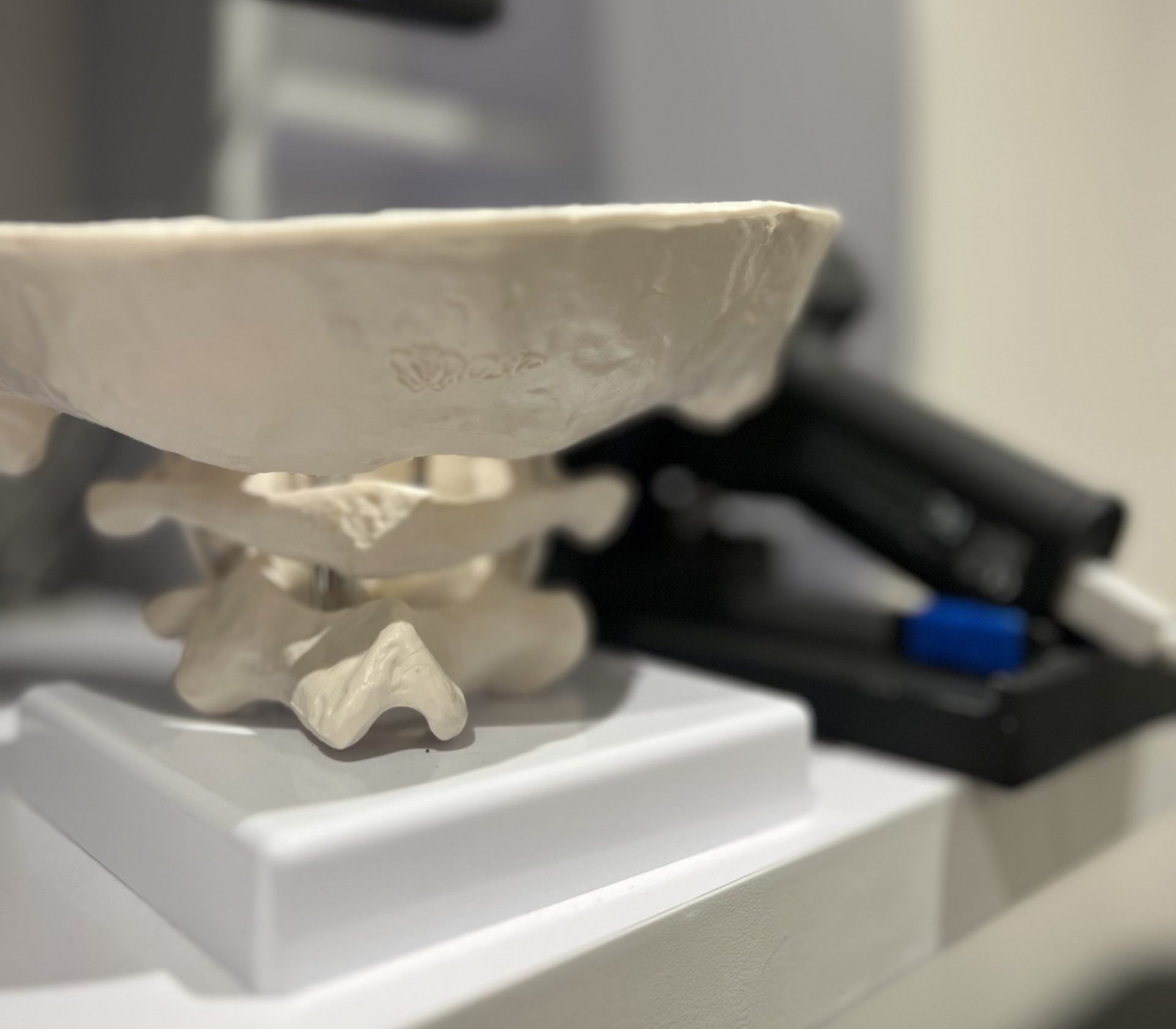
Knee Chest Upper Cervical care (KCUC) is a precise technique used to correct misalignments of the atlas and axis. The name comes from the position the patient is in during the correction: kneeling, with the chest lowered onto a padded table. This position takes the weight of the body off the neck and allows the practitioner to make very specific, controlled corrections.
Unlike a standard chiropractic adjustment, KCUC does not involve twisting the neck or a forceful thrust. The approach is based entirely on precision rather than force, and a significant amount of time is spent on analysis before any correction is made.
The Assessment Process
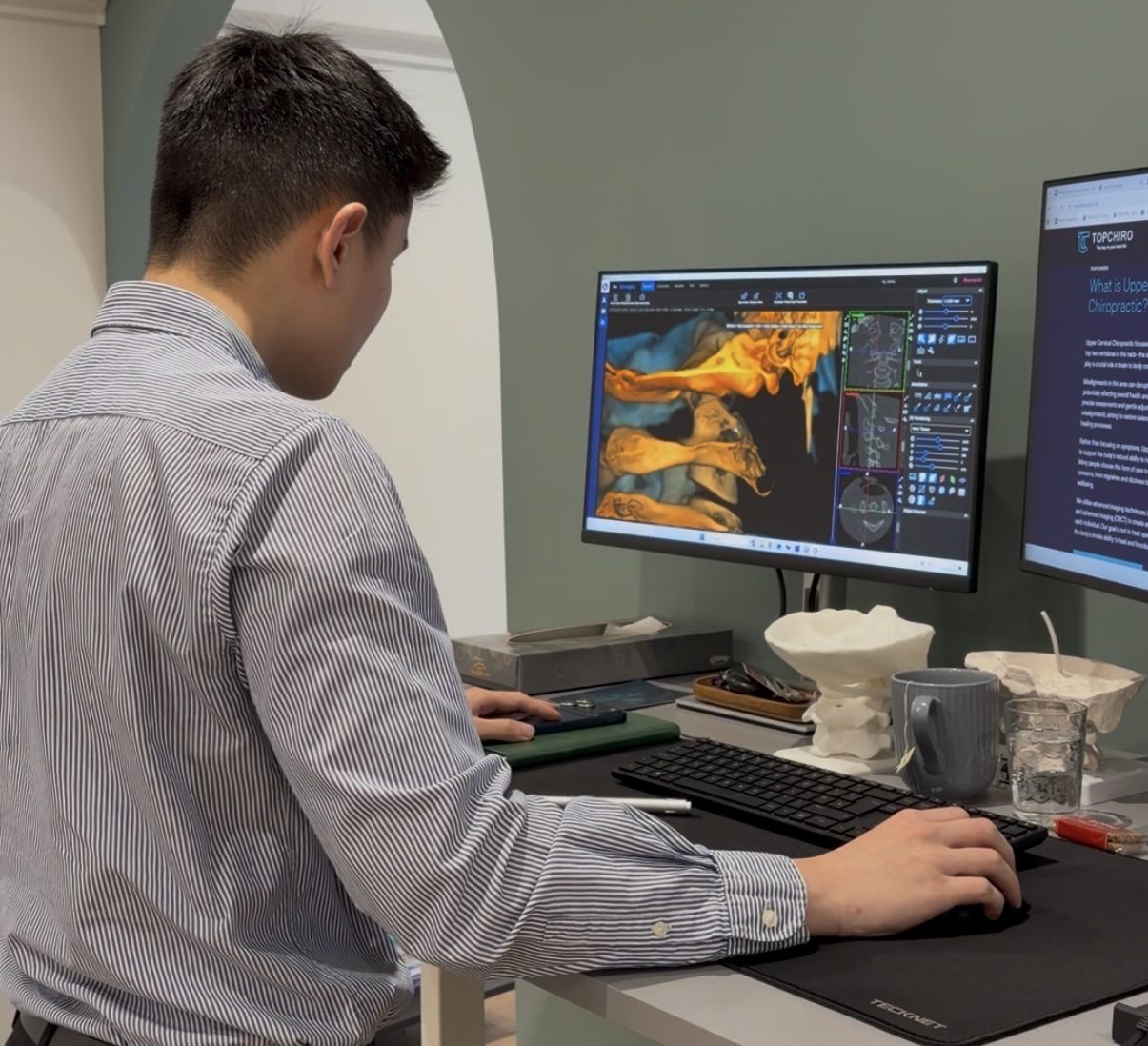
Before any correction takes place, the practitioner carries out a detailed assessment. This includes measuring a full cranial nerve examination (12 very important nerves housed in the upper neck area), digitalised neck health function testing with our NeckCare device, infrared thermography, postural analysis, and specific cervical CBCT 3D images taken and analysed to understand the nature of the misalignment. These allow the practitioner to identify the exact position of the atlas and the precise direction in which it needs to be corrected.
What the Research Shows
A case series by Elster (2003) looked at 100 patients with chronic headache or migraine who received upper cervical chiropractic care. Of those patients, 85 reported improvement in their symptoms, and 12 reported that their migraines had stopped entirely. Elster attributed these results to the restoration of normal brainstem function following atlas correction.
Elster EL. Upper cervical chiropractic care for a patient with chronic migraine headaches with an appendix summarizing an additional 100 headache cases. J Vertebral Subluxation Res. 2003.
A further case study published in the Journal of Upper Cervical Chiropractic Research in 2012 documented a patient whose migraines resolved following atlas correction. The study also included thermographic imaging that showed the temperature pattern along the spine normalise after the correction, providing objective evidence of improved nervous system function.
Signs That the Upper Neck May Be Involved in Your Migraines
Not everyone with migraines will have a significant upper cervical misalignment. A proper assessment will determine whether there is a structural component to your situation. Common indicators include:
- A history of head or neck injury, including whiplash, falls, contact sports, or birth trauma
- Head pain that is always on the same side
- Pressure or aching at the base of the skull or the top of the neck
- One shoulder or hip that consistently sits higher than the other
- A stiff neck or difficulty turning your head fully in one direction
- Migraines that are worse after long periods at a screen, poor sleep, or physical exertion
- Fatigue that feels out of proportion to how much you are doing

Your Questions Answered
How quickly might I see a change?
Everyone responds differently. It depends on how long the misalignment has been there, how much the surrounding tissues have adapted to it, and your general health. Some people notice a change within the first few corrections. Others need several weeks of care before the neck holds its corrected position consistently. Your practitioner will be able to give you a clearer picture after your initial assessment.
Do I need to stop taking my medication?
No, and you should not stop any prescribed medication without speaking to your GP first. Upper cervical care and medical management are not in conflict with each other. Many patients continue with their medication while receiving upper cervical care, and then review that medication with their doctor as their situation improves.
My MRI scan was clear. Can I still have a misalignment?
Yes. Standard MRI and CT scans are designed to look for disease, not structural misalignment. They are very good at identifying tumours, disc problems, and structural damage. They are not designed to detect the subtle positional shifts in the atlas and axis that upper cervical chiropractors assess. Upper cervical X-rays use specific angles and measurements that are simply not part of routine medical imaging. A clear scan does not rule out an upper cervical misalignment.
Could Your Neck Be the Missing Piece?
If you have been living with migraines, pressure at the back of your head, or unexplained fatigue, and you have never had your upper cervical spine properly assessed, it may be worth finding out whether there is a structural component to what you are experiencing.
Our complimentary consultation includes a postural screen, a review of your health history, and an open conversation about whether upper cervical care is relevant to your situation. There is no obligation.
You do not have to keep managing the symptoms. Finding out the cause is where real change begins. Book your consultation today.
Research References
- Flanagan MF. The role of the craniocervical junction in craniospinal hydrodynamics and neurodegenerative conditions. Neurology Research International. 2015;2015:794829.
- Hadjikhani N, Sanchez Del Rio M, Wu O, et al. Mechanisms of migraine aura revealed by functional MRI in human visual cortex. Proc Natl Acad Sci USA. 2001;98(8):4687-4692.
- Bartsch T, Goadsby PJ. Stimulation of the greater occipital nerve induces increased central excitability of dural afferent input. Brain. 2002;125(7):1496-1509.
- Lauritzen M. Pathophysiology of the migraine aura: the spreading depression theory. Brain. 1994;117(1):199-210.
- Elster EL. Upper cervical chiropractic care for a patient with chronic migraine headaches with an appendix summarizing an additional 100 headache cases. J Vertebral Subluxation Res. 2003.
- Alperin N, Hushek SG, Lee SH, Sivaramakrishnan A, Lichtor T. MRI study of cerebral blood flow and CSF flow dynamics in an upright posture. Acta Neurochir Suppl. 2005;95:177-181.
- Travell JG, Simons DG. Myofascial Pain and Dysfunction: The Trigger Point Manual. Vol. 1. Williams & Wilkins; 1983.
- Bogduk N. Cervicogenic headache: anatomic basis and pathophysiologic mechanisms. Curr Pain Headache Rep. 2001;5(4):382-386.
- Jull G, Trott P, Potter H, et al. A randomized controlled trial of exercise and manipulative therapy for cervicogenic headache. Spine. 2002;27(17):1835-1843.
- Goadsby PJ, Holland PR, Martins-Oliveira M, Hoffmann J, Schankin C, Akerman S. Pathophysiology of migraine: a disorder of sensory processing. Physiol Rev. 2017;97(2):553-622.
This article is for information purposes only and does not constitute medical advice. Upper cervical chiropractic care addresses structural misalignment of the spine and does not claim to diagnose, treat, or cure any medical condition including migraine. Please consult your GP or healthcare provider about your individual health concerns.