
A client came to us after living with cervical dystonia for around twenty years. He’d seen chiropractors before without much success, and by his own account the previous care he’d had never really got to grips with the condition or explained what was actually going on.
What changed this time was the approach: a detailed history, plenty of questions, and an explanation of the reasoning behind the plan rather than a generic adjustment routine. He started on a weekly schedule, moving to monthly once things stabilised, and reports being free of the severe muscle pain that had plagued his neck and shoulders for the better part of two decades. He’s also noticed long-standing sciatica and lower back pain settling, and tinnitus that had bothered him for years occurring far less often.
Cervical dystonia is a genuinely complex neurological condition, and it’s worth understanding what’s actually happening in the brain before looking at where the upper neck fits in.

What Is Cervical Dystonia and What Is Actually Happening in the Brain?
Cervical dystonia, sometimes called spasmodic torticollis, causes involuntary contractions in the neck muscles that pull the head into an abnormal position, whether turning, tilting, or drawing forward or back. It typically develops in mid-life and affects women roughly twice as often as men. Around half of those living with it experience significant neck pain alongside the abnormal posturing.
The condition originates in the brain rather than the neck. Current research points to dysfunction in a network involving the basal ganglia, cerebellum, and sensorimotor cortex, structures responsible for coordinating movement and integrating sensory feedback from the body. Rather than a single faulty signal, dystonia is increasingly understood as a breakdown in how these regions communicate with each other, particularly around processing sensory information and translating it into appropriate motor commands.
The Role of the “Sensory Trick” (Geste Antagoniste)
One of the most distinctive features of the condition is the sensory trick, sometimes called a geste antagoniste, where lightly touching the face or head in a particular spot temporarily reduces or even eliminates the abnormal posture. Up to four in five people with cervical dystonia experience some benefit from this.
Researchers studying the phenomenon have found it involves genuine changes in brain activity, with shifts in connectivity between sensory processing regions and the areas that control movement. The existence of the sensory trick has led many researchers to view cervical dystonia as a disorder of sensorimotor integration as much as one of movement itself, meaning the brain isn’t processing proprioceptive information from the neck and head correctly, not just sending faulty commands to the muscles.
Why Proprioception from the Upper Neck Matters
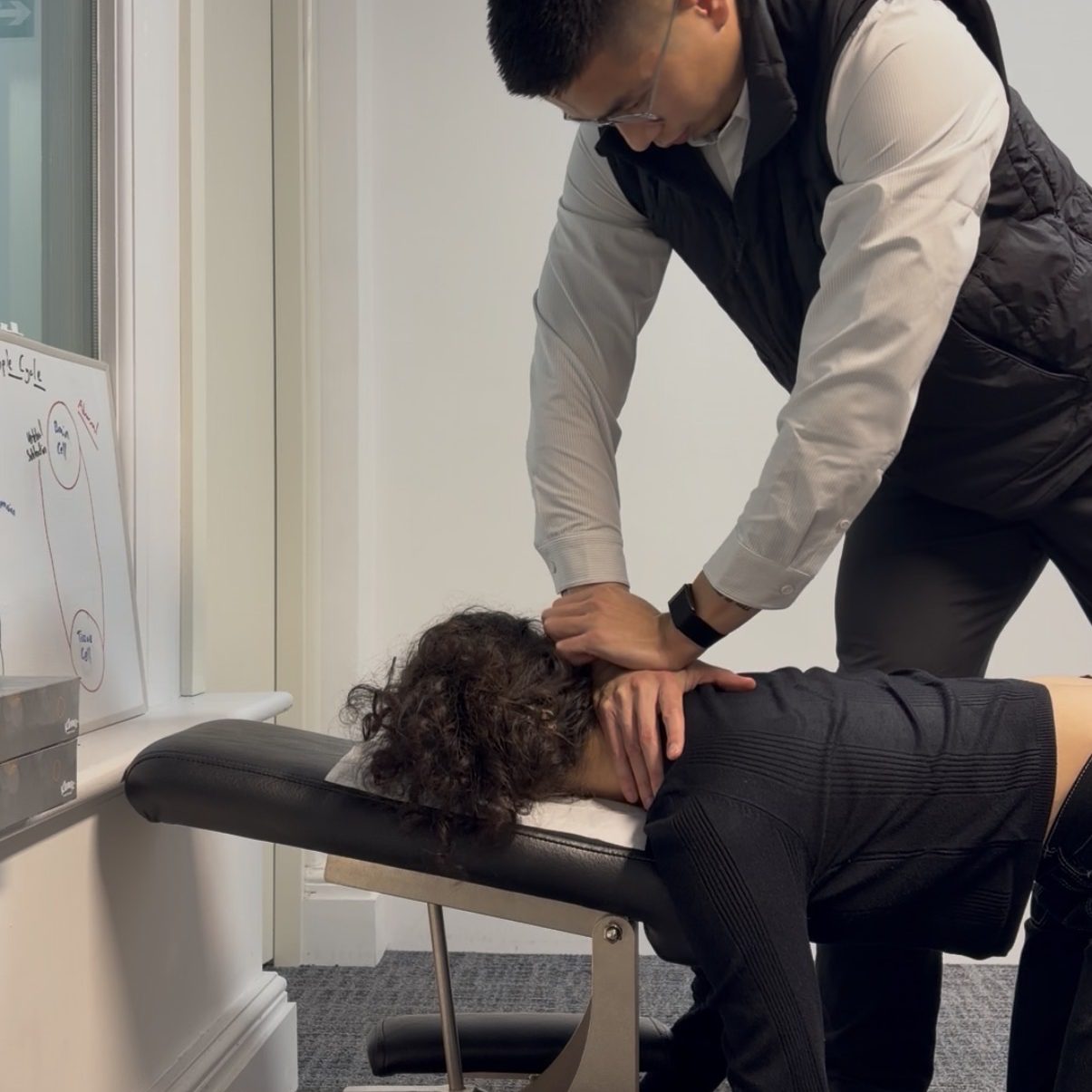
This is where the upper cervical spine becomes relevant. The joints around the atlas and axis carry an unusually dense concentration of proprioceptive nerve endings compared with the rest of the spine, because they need to report head position with far greater precision than joints lower down. This region feeds directly into pathways involved in head and eye position, including the cervico-ocular reflex, and plays a central role in how the brain maintains an accurate sense of where the head sits in space.
Given that cervical dystonia already involves a network struggling to process sensory information correctly, and that something as small as a light touch to the face can shift that network’s output, it stands to reason that a joint delivering degraded or asymmetric proprioceptive signals, because it’s misaligned or moving unevenly, adds another layer of poor-quality input into a system that’s already working with a distorted picture.
Restoring even movement and proper alignment at the craniocervical junction cleans up that signal at the source. It’s the same principle behind why a sensory trick works: change what the brain is receiving from the periphery, and the output changes with it, at least for as long as that input holds.
That’s a plausible explanation for why this client experienced what he did. Correcting the joint mechanics wouldn’t touch the basal ganglia circuitry directly responsible for dystonia, but it removes a source of mechanical noise that’s been feeding into an already overloaded nervous system, which lines up with the drop in muscular strain and pain he described as his neck stopped fighting a constant involuntary pull.
Where This Leaves Someone Living with Cervical Dystonia
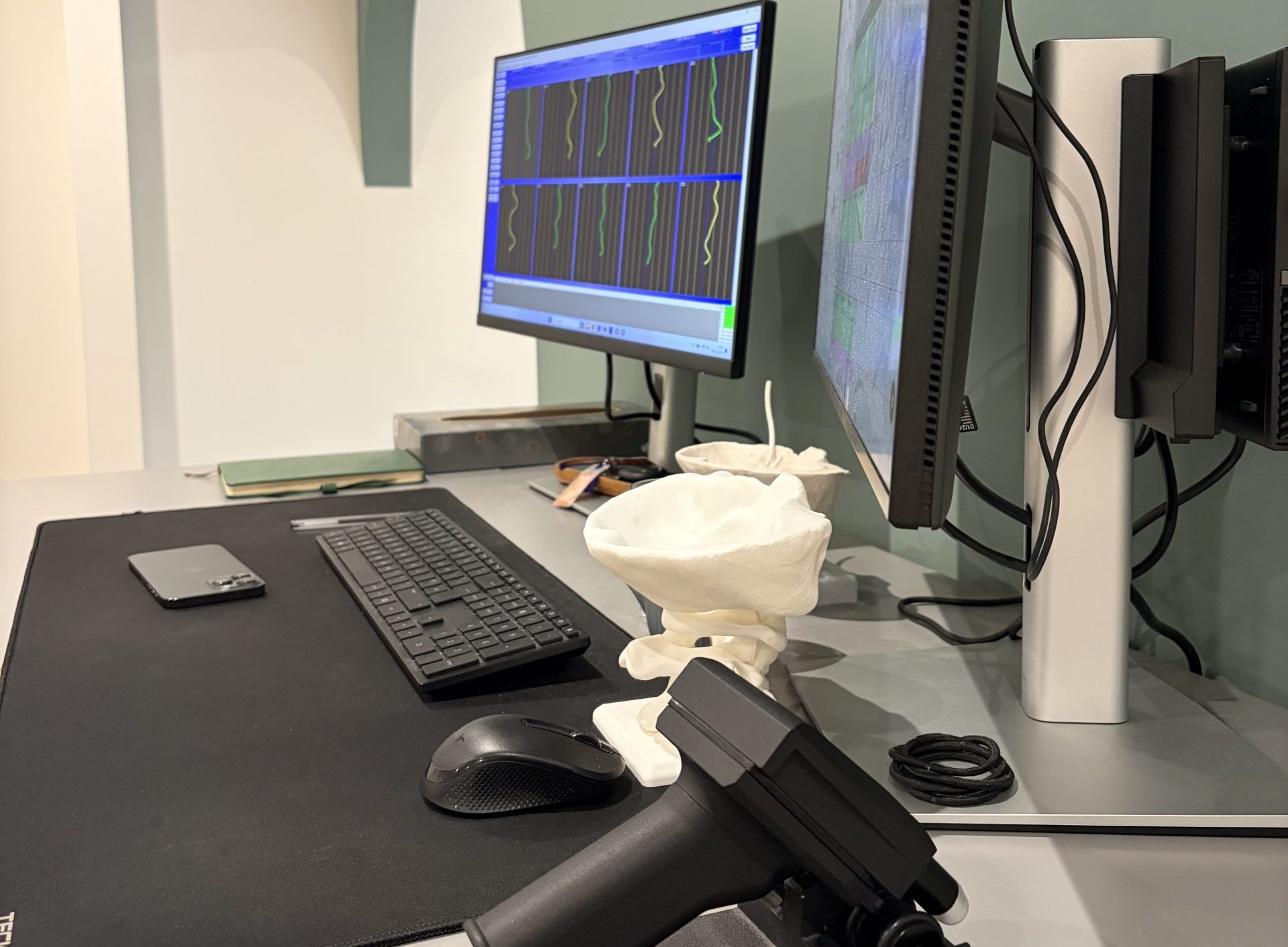
For this client, what we found was genuine misalignment at the craniocervical junction, restricting movement and altering the mechanics on one side of his neck. Addressing that gave his nervous system a cleaner, more even stream of information to work with, and the reduction in pain and secondary symptoms he’s experienced over the following months reflects that.
If you’re living with cervical dystonia and want your upper neck properly assessed as part of your overall care, get in touch with your nearest clinic in London, Birmingham, Newcastle, or Edinburgh to arrange a consultation.
You can book an initial consultation with our clinic team today or schedule a free discovery call to find out more.
Follow us on social media
References
- Pacific Neuroscience Institute. Cervical Dystonia. Clinical overview of causes, demographics and management. Patel, N., Hanfelt, J., Marsh, L., Jankovic, J. Alleviating manoeuvres (sensory tricks) in cervical dystonia. Journal of Neurology, Neurosurgery & Psychiatry, 2014.
- Sanjay, S., et al. Sensory Trick in a Patient with Cervical Dystonia: Insights from Magnetoencephalography. Brain Sciences, 2018.
- Loyola, A., et al. Cortical mechanisms of sensory trick in cervical dystonia. Study of EEG and EMG correlates of alleviating manoeuvres.
- Kägi, G., et al. Sensory Tricks in Primary Cervical Dystonia Depend on Visuotactile Temporal Discrimination. Movement Disorders, 2013.
- Frontiers in Neurology, Dystonia section. Observing the Diversity of Alleviating Manoeuvres in Cervical Dystonia. Treleaven, J. Clinical recognition of the role of the cervical spine in signs and symptoms of altered sensorimotor control. Review of cervical proprioceptor density and reflex pathways including the cervico-ocular reflex.
- Kristjansson, E., Treleaven, J. Sensorimotor function and dizziness in neck pain: implications for assessment and management. Discussion of suboccipital muscle spindle density.
- Jansson, K., et al. Cervico-ocular Reflex Is Increased in People With Nonspecific Neck Pain. Physical Therapy, 2016.