
A chiropractic adjustment is a high-velocity, low-amplitude input delivered by a trained Doctor of Chiropractic to a specific segment or region of the neuro-spinal system. The contact is short, but the input is profound, activating the mechanoreceptors and proprioceptors embedded in the paraspinal muscles and joint capsules. That burst of sensory information travels up the spinal cord to the brainstem and cortex, where the brain re-reads its position, tension, and tone.
The goal isn’t to “pop” or “crack” anything; those sounds are simply gas releasing from joint capsules and have nothing to do with whether the adjustment was effective. The goal is to correct a subluxation- a neuro-spinal dysfunction pattern that includes three components:
- Physical or biomechanical misalignment
- Joint fixation and reduced motion
- Neurological interference (disrupted neurosensory communication between brain and body)
All three components must be present and addressed.
In children, the adjustment is delivered with even less force than in adults. The amount of pressure is comparable to checking the ripeness of an avocado. The technique is gentle, specific, and child-appropriate through every stage of life.

So, What Is an Adjustment Really?
If you’ve ever watched your child get adjusted in under two minutes and wondered, “Wait—that’s it?”, you’re asking exactly the right question.
Every other healthcare experience has trained you to expect the opposite: 60-minute physical therapy, 45-minute occupational therapy, 30-minute paediatrician visits. Longer must mean more thorough. More hands-on must mean more personalised.
But chiropractic adjustments delivered to children don’t follow that rule. They’re built on a completely different model. They aren’t trying to stretch a muscle, decompress a disc, or rehab a joint. They’re delivering a precise neurological signal to a specific place at a specific frequency, so the nervous system can do what it was designed to do.
How Does a Chiropractic Adjustment Affect the Nervous System?
A chiropractic adjustment affects the nervous system by delivering a controlled burst of neurosensory input that the brain uses to recalibrate how it processes information from the body.
A 2016 study published in Neural Plasticity demonstrated that manipulation of dysfunctional spinal joints produces measurable changes in prefrontal cortex activity- the area of the brain responsible for executive function, attention, and autonomic regulation. The mechanism is neurological, not muscular.
Here is what happens in sequence:
-
Mechanoreceptor activation: The adjustment stimulates receptors in the paraspinal muscles, which have the highest density of muscle spindles anywhere in the body.
-
Brainstem reception: That sensory burst travels through the dorsal column to the brainstem, the region that controls heart rate, breathing, digestion, and arousal.
-
Cortical integration: The brain re-reads the body’s position and tone, producing normalised sensorimotor integration.
-
Autonomic shift: The vagus nerve and parasympathetic system are engaged, shifting the body out of sympathetic dominance- the chronic “fight-or-flight” state most dysregulated children are stuck in.
Children with Autism, ADHD, and Sensory Processing Disorder frequently share an underlying pattern: Autonomic Nervous System dysfunction, more commonly referred to as dysautonomia and nervous system dysregulation. This reflects a shared mechanism of brainstem and vagal regulation gone offline. A precise chiropractic adjustment is one of the few inputs that directly addresses that foundational layer, which is why the same kind of care benefits children with very different diagnoses.
This is also why a chiropractic adjustment can affect things that seem unrelated- sleep, digestion, immune function, and emotional regulation. The nervous system controls all of it. When the input changes, the output changes.
A 2021 study in Frontiers in Pediatrics found measurable improvements in brainstem regulation among colicky infants after gentle, chiropractic-style vibrational care, supporting the principle that early-life dysregulation responds to specific sensory input rather than to time-intensive interventions.

Why Are Paediatric Chiropractic Adjustments So Short?
Paediatric chiropractic adjustments are short because a child’s nervous system can only absorb so much sensory input before it becomes overwhelmed.
Children dealing with chronic dysregulation are already over-stimulated and overwhelmed by school, screens, sensory input, food sensitivities, and a hundred other things their dysregulated brain can’t filter. Adding 30 to 60 minutes of additional hands-on input wouldn’t be more thorough; it would be counterproductive.
Think of the nervous system as a computer with limited processing power:
- When too many programs run at once, the system slows down or crashes.
- A child stuck in sympathetic dominance and dysregulation has minimal spare processing capacity.
- Asking that brain to absorb a long, high-input session can trigger the same meltdown response parents see at the dentist, at occupational therapy, or after a birthday party.
The adjustment is short because the nervous system is overwhelmed, not in spite of it.
A precise input delivered to the area of primary subluxation and dysfunction takes roughly 90 seconds to two minutes, including both the analysis and the adjustment itself. The brain then spends the next 24 to 72 hours doing the actual work: releasing stuck stress patterns, rewiring neural pathways, restoring vagal tone, and re-establishing autonomic balance.
Sometimes the most healing thing we can do is give the nervous system less to process, not more.

Why Is Frequency More Important Than Duration?
Frequency matters more than duration because the brain rewires through neuroplasticity, and neuroplasticity has one rule: repetition, not duration. The brain does not rewire from a single long session; it rewires from consistent, specific, repeated input delivered over time.
A foundational 2008 paper in the Journal of Speech, Language, and Hearing Research outlined the principles of experience-dependent neural plasticity, noting that repetition, specificity, and intensity of input- not duration of a single session- drive lasting neural change. The same principle governs learning a language, hitting a cricket ball, or rehabbing after a stroke. Frequency drives the change.
The Math Behind Nervous System Care
| Measurement | Time Allocation |
| Total Hours in a Week | 168 hours |
| Weekly In-Clinic Care (2–3 visits) | ~6 minutes |
| Time Between Visits | 167 hours and 54 minutes |
Which is more powerful: the 6 minutes, or the 167 hours and 54 minutes?
Obviously, the 167:54. But here’s what most parents miss: those 167 hours can either be working for the child or against them. Whether the time between visits builds healing or builds stress depends on whether the nervous system has received the right input often enough to actually start rewiring.
This is why high-frequency, short-duration care is the model for nervous system regulation. Each adjustment delivers a release. Stress, growth spurts, illness, and sensory overload all reload the system. High frequency keeps the release ahead of the reload, particularly during the early phases of care when the nervous system is climbing out of long-standing dysregulation.
The adjustment doesn’t do the actual healing. The adjustment is the catalyst. The brain and nervous system then integrate and do the healing between the adjustments.
Our Approach
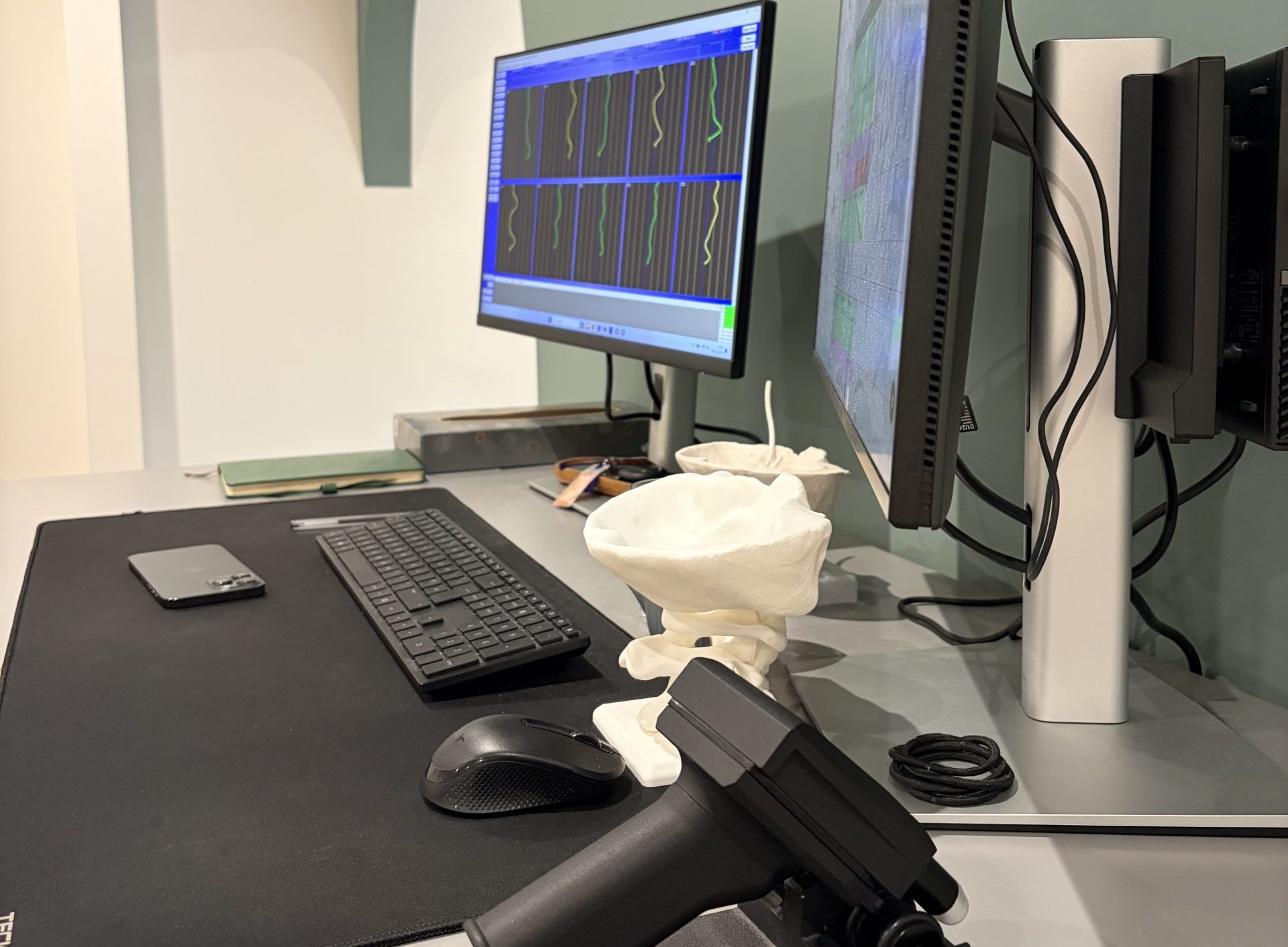
Using the Titron thermography scans along with other forms of neurological analysis and assessment allows us to form a deeper, more complete picture of subluxation, neurological dysfunction, and dysregulation than traditional chiropractic assessments alone.
What’s more, the functional assessment that looks at things like retained primitive reflexes and vestibular/visual distortions also often misses the mark, since those elements are more downstream or “middleman” dysfunctions, but not the actual upstream foundational issue.
Finally, the technologies help us become far more accurate with three absolute essential clinical decision-making elements:
- Proper care planning: Each and every client needs a very specific initial frequency and overall duration of care that is entirely personalised and unique to them.
- Specific adjusting techniques: Different chiropractic techniques affect the nervous system in different ways. Therefore, the specific adjusting approach must be tailored to each specific client (versus using the same technique system for every single client).
- Primary subluxation targeting: While the scans do not tell us exactly where to adjust, there are all sorts of indicators and patterns that help us narrow down the primary subluxation.
We don’t guess. We test.
What Should I Expect Between Chiropractic Adjustments?
Between chiropractic adjustments, the nervous system does the actual healing work. Most parents are watching for dramatic behavioural or developmental wins, but those almost always arrive after an initial phase of body-based shifts. We call them the Neurological Soft Signs of Healing, and they typically appear in this order:
- Sleep: Falling asleep faster, staying asleep longer, and waking more rested.
- Digestion and elimination: More regular bowel movements, less reflux, and a healthier appetite (a direct sign of restored vagal tone and gut-brain axis function).
- Immune function: Fewer recurring illnesses, healthier fevers, and faster recovery.
- Motor tone: Better posture, more organised and efficient motor planning, a calmer body, and improved endurance.
These shifts are the nervous system coming back online. They’re not glamorous, but they’re proof that the adjustment is doing what it’s designed to do: restore function at the most foundational levels first.
Body first, brain second. Always.
The Bottom Line for Parents
A neurologically-focused chiropractic adjustment isn’t simply for the spine, muscles, or soft tissues. It’s a precise neurological input- short, specific, frequent- that activates the brain’s ability to recalibrate the entire nervous system. The mechanism is sensory input, brainstem reception, cortical integration, and autonomic shift. The healing happens between visits, which means the care plan frequency and duration are equally as important as the adjustment itself.
If your child has been through every protocol, every supplement, and every therapy, and the missing piece keeps feeling like it’s something deeper, there’s a reason. The foundation is neurological. And the right input, delivered in the right place at the right frequency, is what changes the trajectory.
You can book an initial consultation with our clinic team today or schedule a free discovery call to find out more.
Follow us on social media
References
- Haavik H, Niazi IK, Amjad I, et al. Neuroplastic Responses to Chiropractic Care: Broad Impacts on Pain, Mood, Sleep, and Quality of Life. Brain Sciences. 2024;14(11):1124. doi:10.3390/brainsci14111124
- Lelic D, Niazi IK, Holt K, et al. Manipulation of Dysfunctional Spinal Joints Affects Sensorimotor Integration in the Prefrontal Cortex: A Brain Source Localization Study. Neural Plasticity. 2016;2016:1-9. doi:10.1155/2016/3704964
- Hoeve J. Clinical Evidence of Vestibular Dysregulation in Colicky Babies Before and After Chiropractic Treatment vs. Non-colicky Babies. Frontiers in Pediatrics. 2021;9. doi:10.3389/fped.2021.668457
- Kleim JA, Jones TA. Principles of Experience-Dependent Neural Plasticity: Implications for Rehabilitation After Brain Damage. Journal of Speech, Language, and Hearing Research. 2008;51(1). doi:https://doi.org/10.1044/1092-4388(2008/018)